
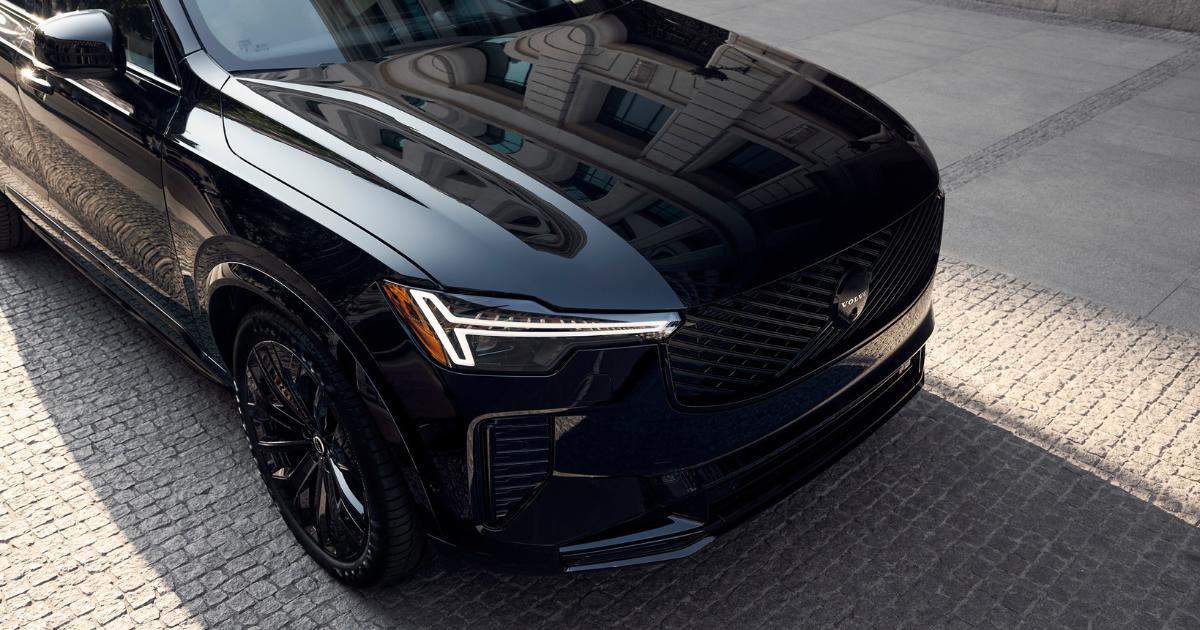
The Volvo XC90 fits households that regularly carry five to seven people and need a third row they will actually use. It is a harder sell for drivers who rarely fill the second row and would rather have a smaller vehicle. Everything else, including the seating layout and the powertrain, follows from those two facts. McDonald Volvo Cars in Littleton, Colorado, sells the XC90 in gas (mild hybrid) and plug-in hybrid form, and this guide sets out the household questions worth answering before a test drive.
The Three Questions That Decide It
Most of the fit question comes down to people, car seats, and gear. Volvo builds the 2026 XC90 with three rows of individually reclining seats in six-seat or seven-seat form.
Start with a normal week rather than a holiday week. Count the people who ride with you on a Tuesday, not the ones who join twice a year. Then count the car seats and boosters that stay installed. Then think about what travels with you: a stroller, hockey bags, a dog, skis, or a folding table for the market.
Household Fit Check
The table below maps common household patterns to what the XC90 asks of you in return.
| Household pattern | What it means for the XC90 | What to confirm |
|---|---|---|
| Five or fewer most days | The third row stays folded and the cargo area does most of the work | Whether a five-seat XC60 would cover the same week |
| Six regular passengers | A six-seat layout gives everyone a place without folding seats daily | Second-row access with the third row occupied |
| Car seats in the second row | ISOFIX points and a booster cushion in the center position matter more than trim | That your seats install cleanly in the vehicle you drive |
| Adults or teens in the third row | Third-row space is the limiting factor, and Volvo does not publish legroom for it | A seated test with the second row set for its usual passenger |
| Gear-heavy weekends | 8.7 cubic feet behind the third row fills quickly with a stroller or coolers | Whether a roof box or a folded third row fits your routine |
If two of the three answers point to a full second row most days, the XC90 is worth a serious look. If the third row would stay folded 50 weeks a year, a five-seat XC60 does the same daily work with less vehicle around you.
What Six or Seven Seats Actually Change
The difference is more than one seat. A seven-seat XC90 uses a second-row bench, and Volvo offers an integrated booster cushion in the center position of that bench on most seven-seat models. The cushion positions the seatbelt for a child who has outgrown a child seat, without a separate booster.
A six-seat XC90 trades that center position for easier movement between the second row and the third. Volvo lists both layouts with the same maximum cargo figure, and both are available on the gas and plug-in hybrid versions. While Volvo's consumer-facing specs omit third-row legroom, other 2026 XC90 vehicle specifications report 31.9 inches. Even with that number in mind, the most useful test is to sit back there yourself and load a car seat into the second row while the third row is occupied.
Other details that matter with children on board include ISOFIX mounting points in the rear seat, a power child safety lock, and third-row air conditioning.
If you want the full decision sequence, from powertrain to equipment level, the guide to choosing the right three-row Volvo SUV walks through it step by step.
Cargo and Size: The Practical Limits
Cargo numbers mean little without knowing how many seats are in use. Volvo lists 8.7 cubic feet behind the third row, 23.0 cubic feet behind the second row in the six-seat layout, and 85.7 cubic feet with the rows folded. The cargo floor is 44.5 inches wide between the wheel housings, with 13.2 inches from the third seatback to the tailgate opening.
2026 XC90 Cargo Space by Seat Configuration
Read the figure that matches the number of people riding with you, not the maximum.
| Seats in use | Cargo behind them | Note |
|---|---|---|
| Third row up | 8.7 cu. ft. | The figure that applies to a full household |
| Second row up | 23.0 cu. ft. (six-seat); 23.1 cu. ft. (seven-seat) | Third row folded |
| First row up | 41.5 cu. ft. (six-seat); 40.2 cu. ft. (seven-seat) | Second and third rows folded |
| All rows folded | 85.7 cu. ft. | Volvo's maximum figure for both layouts |
Volvo also lists maximum figures that include the storage area under the floor: 10.6 cubic feet behind the third row and 34.6 behind the second. The tailgate is power operated and can open hands-free with a kick under the rear bumper.
Size matters as much as space. Volvo lists the 2026 XC90 at 195.0 inches long, 69.9 inches tall, and 79.1 inches wide, or 84.3 inches with the mirrors out. The turning circle is 39.7 feet. Measure your garage before you assume the vehicle fits, and check the height if you park under a low carport or use a roof box. Volvo lists a maximum roof load of 220 pounds and a maximum towing capacity of 5,000 pounds for the B5 and B6, depending on configuration and required equipment.
Gas or Plug-In Hybrid: A Routine Question
Both versions share the body, the seating layouts, and the 85.7 cubic feet of maximum cargo. The difference is what the vehicle asks of your week.
2026 XC90 Powertrains by Weekly Routine
Figures are as published by Volvo for the 2026 model year and are EPA estimates where noted.
| Powertrain | What it asks of you | EPA figures Volvo lists | Fits a household that |
|---|---|---|---|
| B5 AWD (mild hybrid) | Gas stops only, no charging | 247 hp; 7.3 seconds to 60 mph | Wants the simplest routine and does not need the extra output |
| B6 AWD (mild hybrid) | Gas stops only, no charging | 295 hp; 23 mpg combined; 6.4 seconds to 60 mph | Wants more power for a loaded vehicle on grades |
| T8 AWD (plug-in hybrid) | Regular charging plus gas stops | 455 hp combined; up to 32 miles electric; 58 MPGe; 27 mpg combined | Can charge at home and mostly drives short distances |
The plug-in hybrid adds a charging routine. Volvo states that the 2026 XC90 plug-in hybrid charges from 0 to 100 percent in around five hours on a 6.4 kW AC charger, and that the EPA-estimated electric range is up to 32 miles. Charging times and real-world electric range change with outdoor temperature and the equipment you use.
If your household has a garage outlet or a driveway charger and most days stay inside that electric range, the plug-in hybrid can cover school runs and groceries on electricity. If parking is on the street or the vehicle covers long highway miles daily, the mild hybrid keeps the routine simpler. The XC90 plug-in hybrid page from McDonald Volvo Cars covers charging and local ownership in more detail.
When the XC90 Is Not the Right Answer
 âÂÂÂÂÂÂÂÂÂÂÂÂThe XC90 is a large vehicle, and large is not automatically better. Three alternatives are worth considering before you commit.
The Volvo XC60 seats five. If the third row would stay folded, the XC60 does the same daily work with a smaller footprint, and it is offered as a gas (mild hybrid) and a plug-in hybrid.
The Volvo EX90 is the fully electric large SUV, also offered with six or seven seats. It suits a household that can charge at home and wants to skip gasoline entirely.
A Certified by Volvo XC90 is a third path. Certified by Volvo vehicles are within five model years, have fewer than 80,000 miles, and pass a 170-plus point inspection, with a 12-month unlimited-mile limited warranty that starts after the new vehicle Basic Warranty expires or 12 months from purchase, whichever is later. Coverage and eligibility vary by vehicle, so confirm the details on the specific XC90 you are considering.
See Whether the XC90 Fits Your Household in Littleton
The most useful next step is a test drive that includes your actual passengers. Bring the car seats, load the stroller, and let the people who will ride in the third row climb in and out. McDonald Volvo Cars is at 6040 S Broadway in Littleton, and the sales team can be reached at 303-928-7378.
Browse the current new Volvo inventory at McDonald Volvo Cars to see which XC90 versions are listed, then call to confirm availability.